
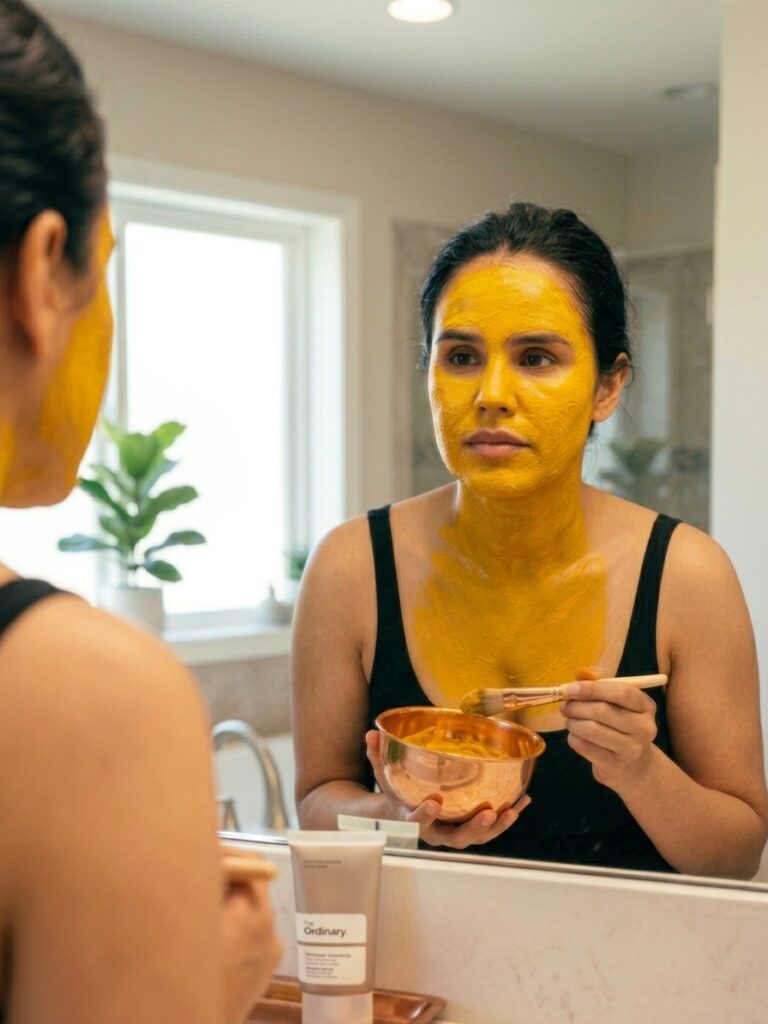

Turmeric face pack recipes rooted in traditional Indian beauty rituals
There are beauty ingredients that come and go with trends, and then there are the ones that have been sitting in our kitchens for generations.
Haldi is one of them.
That little jar of golden-yellow turmeric that we reach for while cooking has another story to tell. In Indian homes, haldi has long been part of beauty rituals, celebrations, and traditions. From the familiar haldi ceremony before a wedding to homemade turmeric face packs passed down through generations, it has always had a place beyond the kitchen.
Today, turmeric is everywhere in the beauty conversation, and a DIY turmeric face mask has become a go-to natural skincare staple for anyone chasing that healthy, glowing skin look. But for me, the interesting part isn’t that haldi has suddenly become trendy.
It’s that something so familiar can still feel special.
So, if you’re curious about bringing a little of that traditional ritual into your skincare routine, here are 5 simple DIY haldi face packs for glowing skin to explore, each using natural, kitchen-cupboard ingredients.
A quick note before you begin: natural doesn’t automatically mean suitable for every skin type. Turmeric can irritate or stain the skin, and ingredients such as lemon or dairy may not work for everyone. Always patch-test first, avoid broken or irritated skin, and stop if you experience burning, itching, or redness.
1. Haldi and Honey Face Pack for Soothing, Glowing Skin
For: Skin that needs a little soothing care
You’ll need:
- ½ to 1 teaspoon turmeric powder
- 1 tablespoon honey
How to make it:
Mix the turmeric and honey together until you have a smooth paste.
Apply a thin layer to clean skin and leave it on for around 10 minutes before rinsing gently with lukewarm water.
Why I like it:
Honey gives this traditional turmeric face pack a soft, comforting feel, while haldi brings the golden ingredient that makes the ritual feel unmistakably Indian. It’s simple, easy, and doesn’t require a kitchen full of ingredients.
Benefits: Soothes and calms sensitive or reactive skin, adds a light layer of moisture, and helps the skin feel soft rather than stripped.
2. Haldi, Besan, and Curd Face Pack for Oily Skin
For: Oily or combination skin
If you’ve grown up around Indian beauty rituals, there’s a good chance besan isn’t new to you either.
You’ll need:
- 1 teaspoon turmeric
- 1 tablespoon besan (gram flour)
- 1 tablespoon plain curd/yogurt
How to make it:
Combine everything into a smooth paste. If it feels too thick, add a little more curd.
Apply gently and leave for about 10 to 15 minutes. Rinse without aggressively scrubbing.
The traditional beauty connection:
Besan and haldi together are classic ingredients in Indian homemade skincare. The combination gives you a creamy, earthy face pack that feels much more like a ritual than another step in a complicated skincare routine.
Benefits: Helps absorb excess oil, gently lifts away dullness, and leaves oily or combination skin feeling clean and balanced without over-drying it.
3. Haldi and Milk Cream Face Pack for Dry Skin
For: Dry-feeling skin
Sometimes your skin doesn’t need another exfoliating product.
Sometimes it just needs something comforting.
You’ll need:
- ½ to 1 teaspoon turmeric
- 1 tablespoon milk cream or full-fat plain yogurt
How to make it:
Mix until you have a soft, creamy paste.
Apply a thin layer and leave it on for approximately 10 minutes, then rinse gently.
Why try it?
The creamy base makes this a richer turmeric face mask for skin that tends to feel dry or tight.
And aesthetically? There’s something wonderfully old-fashioned about this combination. It reminds me that skincare didn’t always come in perfectly packaged bottles.
Benefits: Deeply nourishes and softens rough or tight-feeling skin, and leaves a comforting, cushiony feel that’s especially welcome in dry weather.
4. Haldi and Milk Face Pack for a Natural Glow
For: A simple glow ritual
This is perhaps one of the most uncomplicated haldi combinations, and one of the easiest homemade turmeric face packs for beginners.
You’ll need:
- ½ teaspoon turmeric
- Enough milk to create a thin paste
How to make it:
Mix the turmeric and milk until smooth.
Apply a thin layer and leave it on for approximately 5 to 10 minutes before rinsing.
Keep expectations realistic:
This isn’t about changing your natural skin color. When we talk about a “glow,” we’re talking about skin that looks fresh, comfortable, and cared for, not skin that needs to be lighter. And I think that’s an important distinction.
Benefits: Gently brightens tired-looking skin, refreshes a dull complexion, and works well as a light, everyday-friendly glow ritual.
5. Haldi, Multani Mitti, and Curd Face Pack for Clear Skin
For: A classic Indian beauty ritual
This combination brings together three ingredients that feel instantly familiar in an Indian skincare context.
You’ll need:
- 1 teaspoon Multani mitti
- 1 teaspoon plain curd
- ¼ teaspoon turmeric
- A few drops of rose water, if needed
How to make it:
Mix everything into a smooth paste.
Apply a thin layer and leave on for around 5 to 10 minutes. Don’t allow the mask to become extremely dry and tight on your face.
Rinse gently and moisturize afterward.
Why it’s special:
There’s something about Multani mitti, curd, and haldi together that feels timeless. It’s not a complicated beauty routine. It’s three familiar ingredients, a small bowl, and a few quiet minutes.
Benefits: Draws out excess oil and impurities, tightens the look of pores, and leaves skin feeling clean, matte, and refreshed.
Before You Put a Turmeric Face Pack on Your Skin
Patch-test first.
Apply a small amount of the mixture to an inconspicuous area and wait to see how your skin responds.
Keep it short.
You don’t need to leave a turmeric mask on for half an hour, or overnight, to make it “work.” Around 5 to 15 minutes is plenty for most DIY masks.
Don’t scrub.
If the turmeric leaves a little color behind, gently cleanse rather than aggressively exfoliating your skin.
Be careful with sensitive skin.
If your skin is already irritated, sunburned, freshly waxed, or experiencing a flare-up, skip the DIY mask.
Don’t use every ingredient just because it’s natural.
Lemon juice is a common ingredient in DIY skincare recipes, but it can be irritating and can increase the risk of skin reactions. I would leave it out of your at-home haldi routine.
Frequently Asked Questions About Haldi Face Packs
Can I use a turmeric face pack every day?
I wouldn’t recommend making DIY turmeric masks an everyday habit. A few times a week, or occasionally as a self-care ritual, is more reasonable, depending on how your skin responds.
How long should I leave a haldi face pack on?
Generally, 5 to 15 minutes is enough. There’s no benefit to leaving a DIY turmeric mask on for hours.
Will turmeric stain my face?
It can. Turmeric has a naturally strong yellow pigment, so temporary staining is possible. Using a small amount and rinsing thoroughly can help.
Can turmeric help with acne?
Turmeric has anti-inflammatory and antimicrobial properties that have been studied in skincare, but a homemade face pack shouldn’t be considered an acne treatment. Persistent or severe acne is better addressed with a dermatologist.
Can turmeric remove pigmentation?
It’s better to think of turmeric as one traditional skincare ingredient rather than a pigmentation-removal treatment. If you have persistent dark spots or hyperpigmentation, evidence-based skincare and professional advice are more reliable.
What type of turmeric should I use for a face pack?
For DIY skincare, use a clean, simple turmeric powder without added spices or flavorings. If you’re prone to staining or irritation, start with a very small amount.
Sometimes, the best beauty secrets aren’t really secrets at all.
They’re the things we’ve been carrying with us all along.