
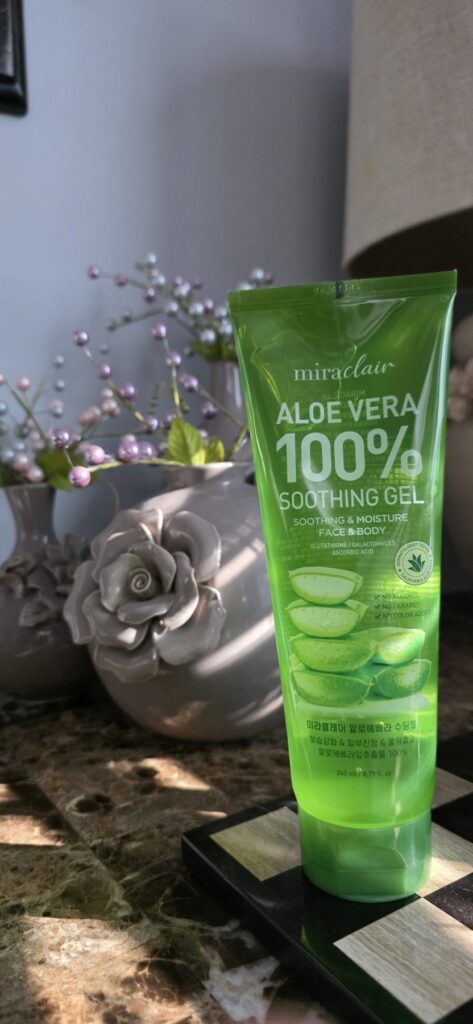

I still remember the first time a bad sunburn sent me straight to the fridge for a bottle of aloe vera gel. Within minutes, my skin felt cooler, calmer, and a lot less angry. That moment made me a believer, and honestly, it’s a story so many of us share. There’s something almost universal about reaching for aloe when our skin needs help.
If you’ve never tried the pure stuff, 100% aloe vera gel with nothing else added, you’re missing out on one of the simplest and most rewarding additions to a skincare routine. Here’s why it’s worth a spot on your shelf.
When your skin always feels thirsty. Aloe gel is mostly water, but it works differently than water alone. It sinks in and helps your skin hold onto moisture, so you get real hydration without that heavy, greasy feeling some creams leave behind. It’s especially loved by people with oily or combination skin who still want that moisture boost.
When you’ve had too much sun. This is the classic use, and for good reason. Aloe cools the skin on contact and helps calm redness and irritation from sun exposure. Keeping a bottle in the fridge for after sun relief is practically a rite of passage.
When you’re healing from small cuts or scrapes. Aloe has a long history of supporting the skin’s natural healing process. Some research even suggests it can help minor wounds recover a bit faster by supporting collagen production and improving circulation in the area.
When breakouts leave you feeling self conscious. Aloe won’t cure acne on its own, but its calming, anti inflammatory properties can help take the edge off redness and swelling around a blemish, all without clogging your pores.
When old scars or dark spots linger. With consistent use, many people notice their acne scars and dark spots start to soften over time. It’s not an overnight fix, but it’s a gentle, steady one.
When fine lines start to show up. Aloe is rich in antioxidants like vitamins A, C, and E, and it may support your skin’s natural collagen production. That can mean firmer, smoother looking skin with regular use.
When your skin feels dull or rough. Aloe contains natural enzymes that gently help shed dead skin cells, giving your skin a brighter look without the harshness of physical scrubs. It’s a gentler option for sensitive skin.
When you’re managing eczema or psoriasis. Many people living with these conditions find aloe’s moisturizing and calming properties genuinely soothing on itchy, dry days. It’s not a replacement for medical treatment, but it can be a comforting addition to your routine.
Simple Ways to Use It
You really don’t need a complicated routine to enjoy the benefits. A thin layer on clean skin, morning or night, works beautifully as a light moisturizer. Chilled gel feels amazing on sunburned or overheated skin. A small dab directly on a blemish can help calm it overnight. For a deeper treatment, try a thicker layer left on for fifteen to twenty minutes before rinsing. It feels like a mini reset for tired skin.
Recommendations & What to Look For
When shopping for aloe vera, purity is everything. Look for options without added alcohol, synthetic fragrances, or artificial dyes, since those extras can irritate skin and defeat the gel’s natural benefits.
-
My Go-To Choice: If you want the exact formula featured here, check out my top recommended Aloe Vera Gel for fresh, daily hydrating power.
-
Organic Option: If you prefer an USDA-certified organic blend, consider this Organic Aloe Vera Gel.
A Couple of Things Worth Knowing
Before using it regularly, do a small patch test first. Some people, especially those allergic to garlic, onions, or tulips, can react to aloe. When shopping, look for gel that’s truly 100% aloe, without added alcohol, fragrance, or dyes, since those extras can work against the very benefits you’re after. And if you’re dealing with a deep or serious wound, please check with a doctor before applying anything, aloe included.
At the end of the day, aloe vera has stuck around for centuries, not because of clever marketing, but because it quietly works for so many people and so many different skin needs. It’s affordable, gentle, and about as low risk as skincare gets. That’s probably why it’s still sitting on bathroom shelves everywhere, generation after generation.